

2026 Reading List
14. Kill Dick Luke Goebel
4/5 Reading Sounds:
13. A Sea Change Cassandra Clare
4/5 Reading Sounds:
12. The Bane Chronicles Cassandra Clare, Sarah Rees Brennan, & Maureen Johnson
5/5 Reading Sounds: God Loves When You’re Dancing by, Tommy WÁ
11. The Butcher of the Forest Premee Mohamed
5/5 Reading Sounds: I Don’t Feel No Ways Tired by, Infinity Song (feat. Peter Collins)
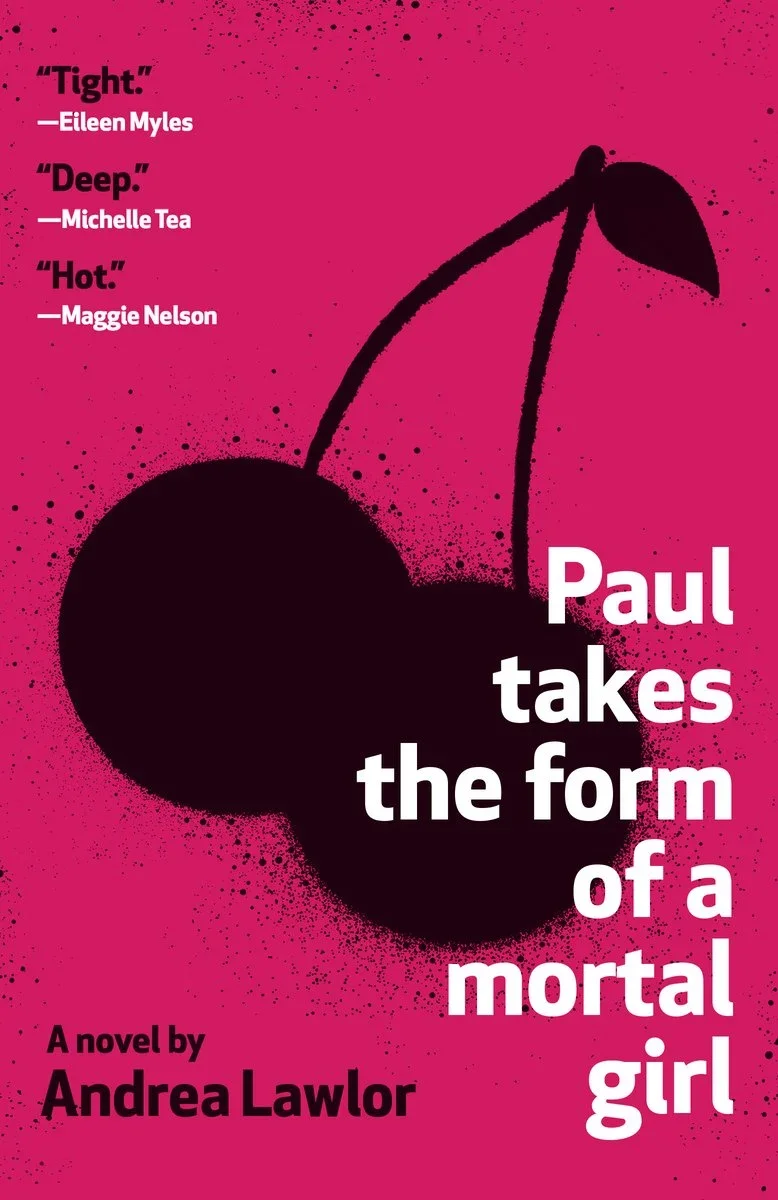
10. Paul Takes the Form of a Mortal Girl Andrea Lawlor
5/5 Reading Sounds: The Subway by, Chappell Roan
I first heard about this book from a friend a few years ago; my friend told me that they thought I would like it, but I don’t remember much more about it than that. I also definitely think that the marketing of the book doesn’t necessarily lend itself toward helping a reader gain any insight about what the reading experience of this book might actually be like. The color palette reminding one of CMYK, the minimalist spray painted cherry design, and the one-word critic reviews–“Tight,” “Deep,” and, “Hot,”–weren’t necessarily doing it any favors. And that’s coming from someone who has absolutely bought a book just because it is pink before. For some reason, when this is translated to queer literature, a lot of the time, the marketing game sort of takes over in a way that doesn’t really help anyone in my opinion. Nothing about this book really appealed to me from a marketing standpoint, but I would also say that nothing about this book’s marketing helped me to understand what this book was going to be about. Either that, or I could have just not been paying attention. For one thing, I did not expect this book to be as long as it was. I thought it was closer to a short story, and when I originally downloaded this on e-book, I was pretty surprised to find that I wasn’t flying through it in the way that I had expected to. It was surprisingly dense, and not as easy to read as I had anticipated. It reminded me of Every Day by, David Levithan, a book I read in high school, one that I did not like much, and one whose sequel has remained unread on my bookshelf since I picked it up from the Barnes & Noble clearance section probably last decade. However, the character in this book Paul is not given the narrative easy way out that Levithan’s protagonist was given: waking up in a different body every day and lacking a central identity to push forward the story in what would generally be thought of as a linear way. Paul is just a shape shifter, forced to navigate with the awkwardness and confusion that arises from that. Shifting from boy to girl or vice versa does not always stop people from recognizing Paul, and this creates some tensions that also serve to drive along the plot line. I was surprised by what an epic fantasy this felt like it turned out to be. When Lawlor talks about Paul’s group of friends bar hopping on a night out, it almost feels like some old-head fantasy author like Tolkien describing the doddering mystical journey of some weary band of travelers. Think about lions, and tigers, and bears; or unicorns, and trolls, and goblins; but dolls, twinks, and bears. Oh my. A queer, gender-fucked night out on the town is given the same mystical novelty as a D+D campaign, resulting in something that feels almost rediscovered as opposed to pioneered. Yet, has there ever been something quite like this? I hear people say stuff about books like The Mists of Avalon, a book that fundamentally changed the way that people discuss a canon, but books that innovate are rarely talked about in a timely manner. And books (like this one) that take innovation from the workshop to the capitalist slaughterhouse are, for better or for worse, eventually going to take all the glory anyway. Twilight was a laughing stock that literally rocked the world, and for worse or for better, I can’t imagine the YA space without it. The Hunger Games went from something to be condescendingly parodied to being unironically toted as a Great Modern Classic. My Year of Rest and Relaxation set off an avalanche of Weird Girl Lit that has so closely and constantly mimicked itself that it’s come around full circle to being a cringey laughingstock again. And then I read something like Paul Take The Form of a Mortal Girl and I find it hard to understand why the only words chosen for the front cover marketing were, “Tight,” “Deep,” and, “Hot.” This book definitely had a lot of sex in it, but the author never strayed into the territory of too sexual. Paul’s story is an adventure, and Paul is a shapeshifter, so it makes sense that the journey would be an extremely physical one. However, in one of the first sex scenes Paul is using a penis to have sex with a man and the description of it felt really off to me. I asked myself How did it take the author over a decade to write this book, and they didn’t even bother to get the sex right? It suddenly occurred to my dumb ass that the sex wasn’t really the point of the scene, but that there was some pretty intense character building happening. It kind of made me sad, but I think this book feels really important. I look forward to reading it over again.
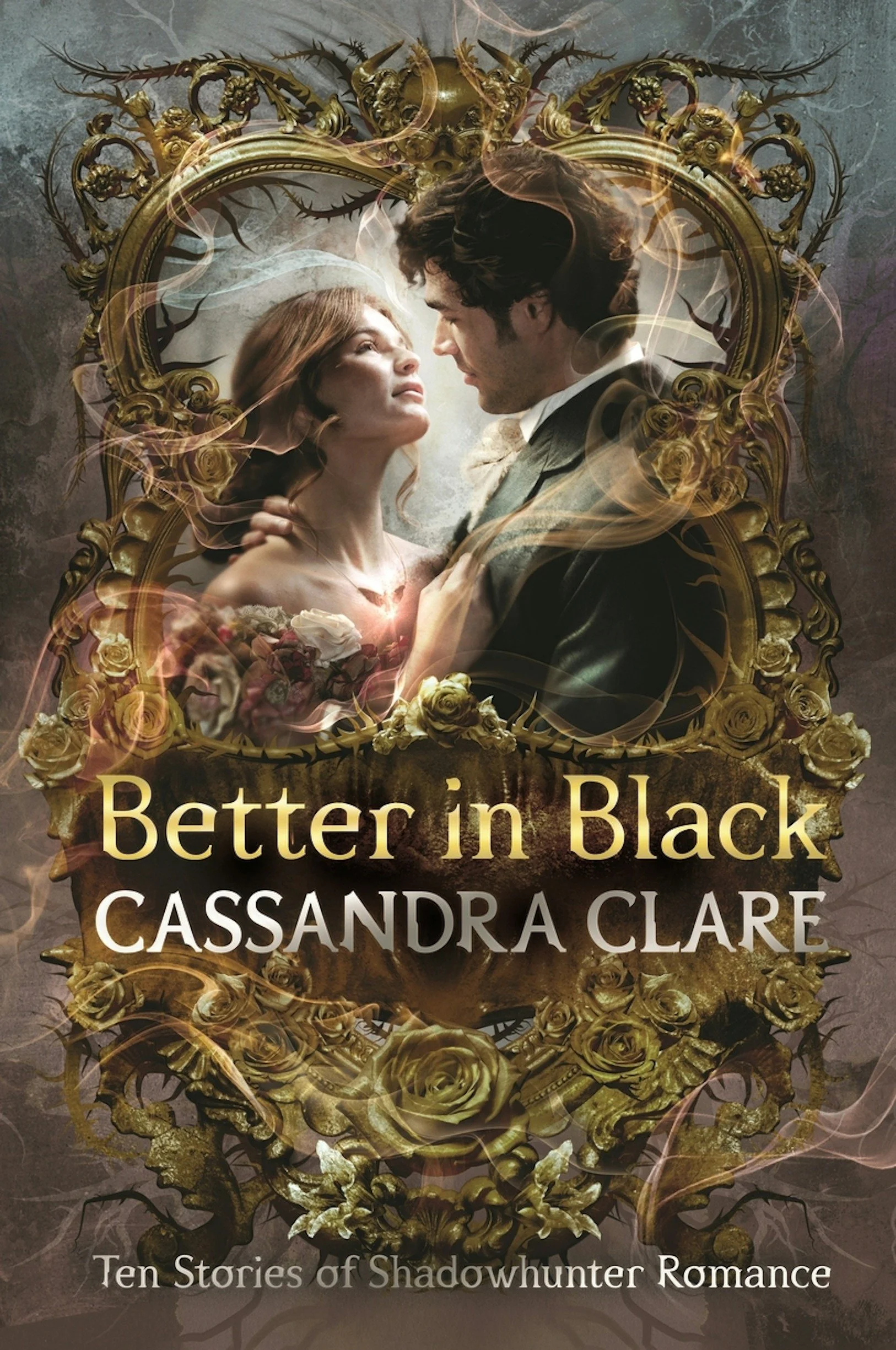
9. Better in Black Cassandra Clare
4/5 Reading Sounds: Angelo by, Gabrielle Cassava
Released at the end of last year, Better in Black consists of ten vignettes following ten different romantic ships from the various Shadowhunter series. On the surface, this is cute and slightly cash-grabby, but I don’t think Cassandra Clare ever really puts out Shadowhunter books without them serving some larger purpose in the grand scope of her Shadowhunter Chronicles. In the past, these short story bind-ups have served as introductory or transitional pieces released between series to promote new characters and plot lines that are going to be relevant in the coming publications. Either that, or they sometimes released in the midst of other series to build on already-rising tension in a way that had Cassandra Clare Tumblr reeling. Recently, she has stated that the next trilogy that is expected to release The Wicked Powers is expected to be the last set in this universe. Therefore, when I saw that the last pair of names listed on the back cover of this book was Sebastian and The Seelie Queen, I knew that this book is setting up quite a bit of what we can expect to see in this last upcoming trilogy. To this end, it was quite successful, but it does definitely feel like a placeholder. It is a last-minute cash grab to squeeze an extra $20 out of everyone who’s bothering to keep up–and I am. But I’m just ready for the first book of The Wicked Powers and the final installment of The Eldest Curses. They cannot come soon enough.
8. Heir of Fire Sarah J. Maas
2/5 Reading Sounds: Dodge by, Baby Nova
Book 3 done, and I feel like my problems with this book series are only getting worse. I do think that there is some benefit to being able to separate the art from the artist, and that is something that I often try to just do for the sake of trying to understand both parts separately before understanding them together. However, it is increasingly difficult to separate the author’s politics in real life from her politics in this fantasy series. I don’t understand necessarily what her point in writing this series is, because I know that her real-life position is pretty staunchly opposite to what I would think if I read her books without knowing. Maybe this is like a form of virtue signaling. I don’t know. There were aspects of this book that I did enjoy. The heavier presence of the witch covens in this book was extremely welcome, and I particularly enjoyed Manon as a main POV character. One third of the chapter POVs follow Manon as the witch covens are training their wyverns provided by the King of Adarlan, and she reveals more about the inner workings of the different witch families and the inter political workings between them. There is also one perspective following Celaena as she trains under a mysterious and attractive new instructor named Rowan to master her fae form, control her elemental fire powers, and earn the audience of the fae Queen Maeve of Wendlyn. The final perspective follows Chaol and Dorian back in Rifthold as they keep readers up-to-date on the much less interesting goings-on of Adarlan politics. There was plenty of magic in this book, making it feel less like an introductory book than its—lowkey boring—predecessors. This was a welcome change, one demonstrated with the heavier presence of magic and other fantasy elements, as well as deepening pathos-driven plotlines that weren’t brought up until this book. I do appreciate the effort to create more three-dimensional characters, but this far into the series, it could almost be a case of too little too late. I’m not sure that there is a chance for me to forgive any of the characters who I have decided to dislike now, and my favorite character is long dead at this point (RIP Nehemia you were so bad). Manon’s storyline was fun and introduced us to her wyvern Abraxos, and the simple opportunity to be a fly on the wall for this gathering of witches was vastly more compelling than anything going on with Chaol and Dorian back in Rifthold. Speaking of, Chaol is learning how to be helpful to the revolution a full book too late, and Dorian is flirting with a castle healer and trying to master his newfound magical ice powers while staying under the radar of his magic-hating, maniacal overlord, High King father. I really thought his healer girlfriend was gonna turn out to be a witch, but I was wrong. She was just an amateur spy for one of the rebels that Chaol was working with. While all of this is going on the background, Celaena is training to master her magical powers and coming to term with her secret royal past that she has kept completely hidden from the reader up until this point. For this reason, it felt hard for me to connect. I feel like I’m being told a fairy tale in a way that I don’t usually want to for an epic fantasy story of this scope. If I wanted a story that had weird revolving trapdoors of information there was no chance of me ever picking up on, then I probably wouldn’t have chosen to read an interweaving epic fantasy consisting of three overlapping series. But beggars can’t be choosers I guess, and this (emphasis on) shit absolutely slaps on the treadmill.
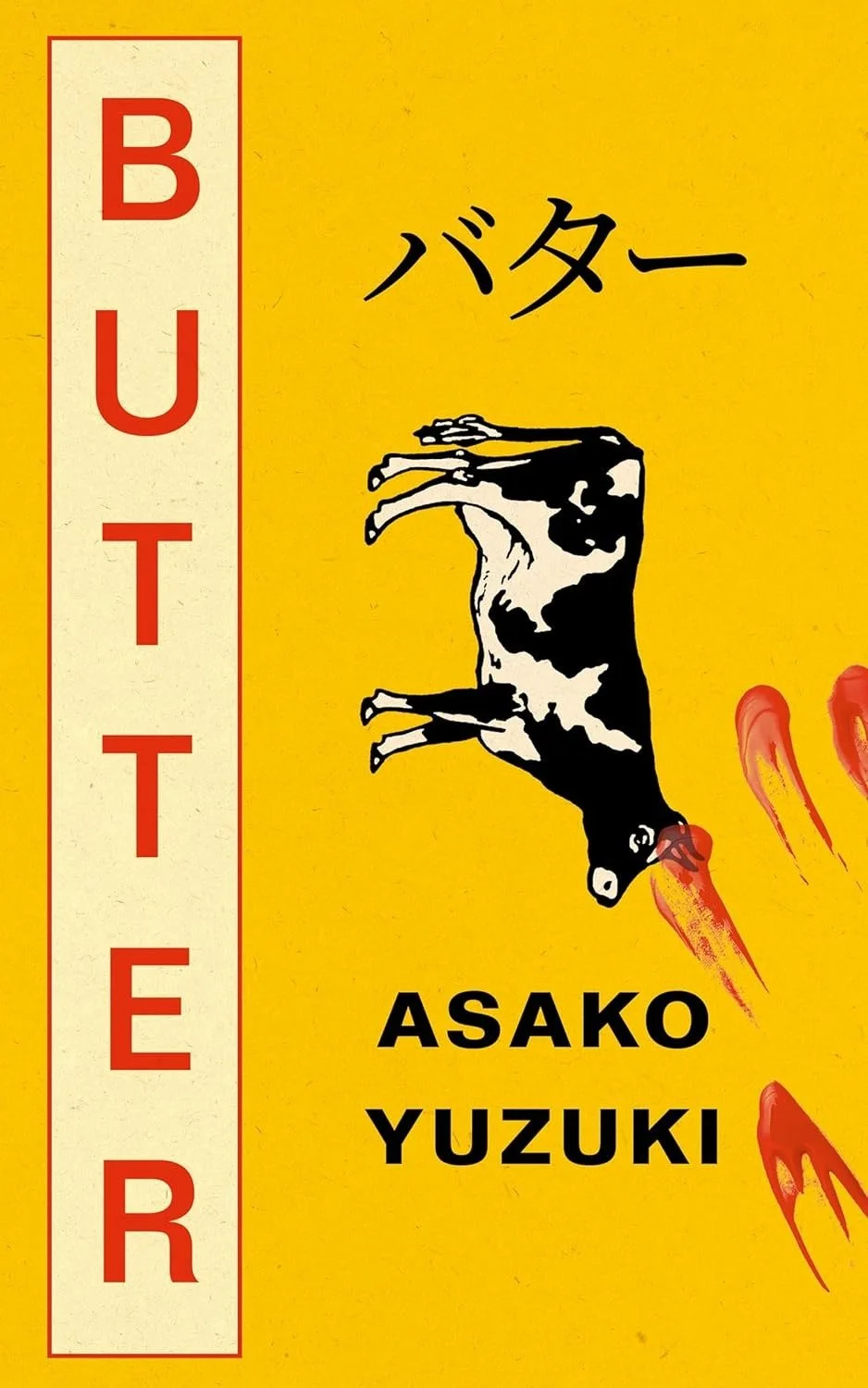
7. Butter Asako Yuzuki
3/5 Reading Sounds: Blood and Butter by, Caroline Polachek
In September of last year, I went to a book festival with my friend. We lied to each other on the way there, saying we were trying to be good and not buy anything. I ended up buying this book as well as Elaine Hsieh Choi’s Where Are You Really From. I picked this one up almost immediately, and then almost immediately stalled out. I don’t know what it was about this story. Everything about it seems right up my alley. Butter follows a journalist who wants to score an interview with a recently imprisoned and notoriously elusive gourmet chef turned murderess. Although she is the center of a media storm and at the receiving end of endless scrutiny and public opinion, nobody has bothered to really try and relate with her until our protagonist the journalist does so by sharing and connecting through recipes. The first recipe that Kajii the murderess shares with Rika the journalist is simple: white rice, soy sauce, and expensive butter. Through simple rituals like creating and consuming meals for herself, Rika tries to understand what events led to the deaths of Kajii’s ex-lovers. In doing so, she uncovers more of the story than she or seemingly any of the public ever expected. Overall, this book was really well crafted, and there were several moments that make it a worthwhile read. However, the pacing was kinda weird throughout, and I kept finding that at those several moments I was thinking to myself, “I kinda wish she wouldn’t take so long to do that again.” There is a scene where Kajii directs Rika–through the glass of the detention center visitation room–to leave and not come back until she has eaten a bowl of warm fast-food butter ramen immediately after having sex. So, naturally, Rika goes and does exactly that, and when she reports back, one of the funniest scenes in the entire book ensues. (“Men are simply very warm creatures, aren’t they?”) However, I wouldn’t say that there were very many punchlines in the book. That entire scene was probably the punchline to a joke that took like 200 pages of the book to set up all the way. In this vein, I come back to the idea of the book being genuinely a marvel to look at as far as craft, but it wasn’t quite what I wanted. I think I was expecting a slasher, or maybe something like a thriller. The bloody handprint on the cover (don’t judge a book by its cover) definitely had me expecting something that was slightly off-target from what lays at the heart of this story. I went through so many ideas while reading this book, guessing where the story was heading, and I have to say I did not guess where it was going at all. The rest of my whining aside, this is genuinely to the author’s credit, because I hate guessing the ending of the book before I get to it. I think I kind of wanted a bigger ending, but I do feel that the ending we got was deserved. There was so much symmetry to the story, and the symbolism of that final scene is truly quite moving. In a game run by incels and misogynists, there is no way to win; and, while Kajii looked like she had it all, she still eventually fell prey to the same titanic societal norms that she tried to manipulate to get where she was. Rika chooses to stop playing stupid games, to stop trying to win stupid prizes, to do something that she truly feels is worthwhile. She decides to invite over a group of her closest friends and family to eat a meal that she cooks for them over the course of days. This decision changes the course of her life, because she has never done anything like this just for the joy of it before. While beautiful, I think I was just a bit underwhelmed. I need to sit with the ending for a while to truly let it sink in and appreciate it.
6. A Black Queer History of the United States C. Riley Snorton & Darius Bost
4/5 Reading Sounds: The Creator Has a Master Plan by, Pharoah Sanders
This is not a book that I would normally pick up for myself. In fact, I didn’t; this book was chosen by a book club, and I am quite glad for this. I would never have picked this up on my own, and even when I did, I prefaced it with protestations like, “I don’t know if I’ll read the whole thing,” and, “If it feels too much like homework, I might not finish for the meeting.” Then I took the book with me on a plane ride and ended up finishing it about a week later. Since then, two months have passed, the book club has meeting been postponed twice, I’ve read books #7-11 on this list, I’m midway through a list of books I haven’t finished yet that is longer than I’d care to admit, I am still the only person I know in the book club who has finished the book, and I still haven’t been able to bring myself to write here about what I read. Firstly, one of the coolest things about reading this book is that nonfiction is usually very intimidating for me. But something about reading nonfiction on an iPad (with WiFi) is wonderful in an almost childlike way. Being able to highlight, search through the book, and even just highlight random stuff and google it so easily made the experience a truly unique one, especially as someone who does not read a lot of nonfiction in general. When the chapter about Black artistry in music came up, I was able to immediately gl search up the artists as they were mentioned. When a historical figure was mentioned, I could highlight their name and find a picture of their face with google, and sometimes a recording of their voice. History like this feels more impactful for some reason. That said, much of this book revolves around history that is not necessarily recorded. Much of queer history is lived in secret or purposefully misreported. This makes it difficult to and relay findings under this umbrella of “sub-history”. How can you as a modern thinker appropriately talk about someone who lived as a trans man before history had even developed the vocabulary to accurately describe that? It’s not like the first trans folks in US history had their pronouns sewed into their trousers. And yet, being able to call on imagery and the internet while reading this book made it feel immersive in a way that I haven’t always known nonfiction to feel. I’m not sure if it was because the digital format was so novel to me or because the writing was so stellar, but it did feel impactful. Probably a bit of both. I think that the biggest impact that this book has had on me is in the conversations that I’ve had since reading it. On page 55 of the book–or 24% through the book on digital–the authors dropped a line very casually that caught my attention. Talking about Josephine Baker, they said, “Baker, who vowed never to play a segregated venue, found more permanent residence in Paris, while many Black artists and intellectuals traveled to Europe to find more temporary reprieve from Jim and Jane Crow and later de facto forms of racially and sexually organized discrimination, oppression, and violence” (Snorton and Bost, 55). I don’t think I have ever come across the term “Jane Crow” before. And here it was presented in such a casual way as nearly to imply that I should already know what it means. And without even looking it up, I sort of did; but, of course, I did look it up, and it is meant to describe the intersectionality of discriminations faced by women who are Black. This seems like a simple concept, and yet it was definitely a concept that was never taught to me in school. I have heard of Jim Crow laws during the Civil Rights Era in history class, but I don’t recall Jane Crow specifically being mentioned. When I interviewed my parents, they admitted that they had never heard of the term Jane Crow either, but they sort of pushed back on the latter point: “When would have been an appropriate time to bring something like that up during history class?” they asked. “When they talked about Jim Crow,” I said, and they kind of just laughed. I did eventually convince my mom to pick up the book herself, and she has been loudly surprised at a lot of what she’s reading. I have mentioned to my family before the “Three Articles of Clothing” laws that were the basis for many police-led raids on various places of queer patronage like The Stonewall Inn. Nowadays, the basis for similar raids has been set by the drag bans in states like TN. The laws are so vague as to allow for something like “Three Articles of Clothing” to become pertinent again. I don’t think my family ever believed me that this stuff was true. And until now, I had only ever heard it from gay elders and the internet. I think my parents almost didn’t believe me for a long time when I tried to tell them why these kinds of laws popping up again are so scary. But this book is the first time that I’ve seen it written down in print somewhere with references and sources and research all in one place. I feel it has made such a difference in being able to talk to my family. I wonder, Why wasn’t this in the history textbooks? I’m pretty old for this content to finally fall into my lap, and thanks to a book club at that! What if I hadn’t read it? I can’t decide between 4 or 5 stars, because I’ve never read anything like this before. However, I’m the only person I know in the whole book club who has finished the book already, and we started it like 2 months ago. It’s dense, it’s hard to read, and it’s absolutely fucked. I mean, who wants to read that? But I guess that’s kind of the point. About it taking me till nearly 30 years old to read something like this. Do I want to read it again? Not really. Am I enjoying it more as I take notes on it in preparation for book club? Not really. Am I excited for book club? Next question. Am I proud of myself for reading it? Kind of. It’d be 5 stars if I liked nonfiction maybe.

5. Crown of Midnight Sarah J. Maas
2/5 Reading Sounds: My Fun by, Suki Waterhouse
I have a love-hate relationship with epic fantasy series like this. On one hand, giving an author the time and space to develop a world at the scale of Throne of Glass is ideal, I think there is something to be said for leaving the reader wanting more. But you could end up with something that takes thousands of pages to get interesting, or you could end up with something that feels more like fan fiction than epic fantasy. I don’t know if either of these are bad outcomes, necessarily, but it can be hard to put effort into reading a book when you know that there is a high likelihood of feeling like your time was wasted. That said, these books have genuinely been fun reading on the treadmill and walking to get groceries. I guess sometimes trash serves a purpose. Don’t tell my sister I said that. Crown of Midnight is book two in the Throne of Glass series, and although I read book one in high school, I have never read past the first book until now. The first book felt like a lot of set-up, like it was the boring part before we can get to the exciting part. But after finishing the second book, I’m pretty sure I still haven’t really gotten to the exciting part. My sister told me that book three is the game-changer, and then the series feels really different after that point. My other sister told me that she thought it happened earlier than that, and I guess I can see where she was coming from. The first book left off after Celaena has won the competition to become the King’s Champion. Now using her skills from being an assassin to serve the king she once sought to undermine, Celanea is determined to quickly get through her contractual four years of service and finally reach her promised freedom. Overall, this book was still fairly predictable. Archer was a snitch, Nehemia was gonna die, Celaena has magical powers. There is a big reveal at the end of this book about who Celaena was before she was Arobynn’s apprentice. (SPOILER: She’s the rightful Queen of Terrasen [Not the the place that Nehemia was from, but one of the other places that Adarlan has colonized]). Speaking of Nehemia, she was definitely one of my favorite characters, and I’m sad that she was killed off. She kept pushing Celaena to do more, to take action, to stop letting herself be controlled by fear. I mean, she is an enemy of the state from a conquered kingdom and somehow finds herself in a love triangle with Barron Trump and the head of the Royal Guard. I don’t think she is appropriately distraught over this situation, and I was kind of waiting for her to get up to speed with that. Nehemia pushing the topic didn’t make sense to me with where the story appeared to be going, and it felt almost too easy to simply kill her off at that point. Instead of pushing Celaena to have any uncomfortable conversation or growth, she is just thrown another bit of trauma. I get that it’s an epic fantasy, but I think Nehemia was just way more compelling when she was alive. It feels like the author wasn’t willing to put in the work it would require to keep around a character who wanted to care and talk about the things that she did. Maas also used this death as a plot device in the development of Celaena and Chaol’s love story, because Celaena knows that Chaol was aware of a threat to Nehemia’s life and did nothing to tell her or Celaena. At the same time, there is a plot surrounding Prince Dorian discovering some long-dormant magical powers that have recently awakened. As he desperately tries to hide their discovery by his tyrannical father, of course things only get more hectic. Eventually Celaena and Chaol discover his secret, Chaol and Dorian are at odds with each other, Chaol knows Celaena’s true identity (and Dorian doesn’t), and Chaol has arranged to send Celaena across the sea to Wendlyn to assassinate their royal prince and queen. It’s a spiderweb of who’s who and who knows what? And it’s not particularly interesting to me. I think that there’s promise with the reveal of Celaena’s fae heritage. There was also the introduction of a new character Baba Yellowlegs. Soon after meeting her in tent of a traveling circus in the area, Celaeana realizes this is no garden variety fortune teller. Baba Yellowlegs is an irontooth witch who has come to the castle for who knows what reason. She gets a little too close to Dorian, pisses of Celaena, and then ends up dead in a pretty cool fight scene. The threat of more witches in the next book is pretty exciting to be honest. I hope there is more magic in the next book.
4. Sula Toni Morrison
5/5 Reading Sounds: Golden Arm by, Sadurn
It’s been so long since I really sat down and read some Toni Morrison. The last time was in 2020 when I read Beloved. It’s weird to think about, I was still in college at the time. I had recently read Sula for one of my college lit classes, and I loved it. These two books were surprising to me, because historical fiction is often too dry for my taste, but from the beginning I felt completely captivated by Morrison’s storytelling. Recently, I unsuccesfully tried to read Song of Solomon. I couldn’t have made it much farther than a chapter or so. I was unable to connect as immediately as I remember with Sula or Beloved, and this made me kind of nervous to reread Sula when it was suggested to me, but I am so glad that I decided to do it anyway. This reading was done under a time limit, because there is a book club meeting coming up where this is the reading. I feel like this was a bad set-up, the cards were stacked against me, but when I opened the book, it did just what I remembered last time: It sucked me in completely, and I finished the book in like a day. Sula is such an interesting character and protagonist, and it has been so long since my original reading, I was unsure of what exactly to expect. I have also seen a lot of content about this book online since my original reading, and this layered on top of the length of time since then has created a strange sense of confusion and misremembering. People–mostly women–talk about this book like a coveted secret; something passed discreetly amongst the women of a family or the young girls of a schoolyard friend group. Sula herself is a polarizing figure, and one of the things that I kept seeing and hearing over and over again online was this sentiment of Sula as a bad influence and Sula as the home wrecker. Most of the online content that I have seen talks about this book in such a scandalous and social way that I was disoriented when I remembered back on my own in-class discussions and do not recall any discussions about this topic. We must have discussed in-class the plot point where Sula sleeps with Nell’s husband, but it never struck me as all that important, and I felt like I was left out of the actual conversation that this book started within culture. I am hopeful that reading this specifically for book club will give me the opportunity to engage with it in a more meaningful way. This time I was struck by how much I enjoyed Sula’s character. She is bold and unapologetic in a way that makes me worry that I’m not supposed to like her as much as I do. I don’t think you are supposed to idolize her, because she is incredibly imperfect. She watched her mom burn to death while her one-legged grandma jumped through a window to try and save her, and she didn’t move to help; she kicked that same grandma–the matriarch of her family, who sacrificed so much for Sula to be able to have the ability to live the life she enjoys–out of her own home; and she straight up watched Chicken Little drown at the beginning of the book. And I kinda think she’s a queen, idk. I was also shocked at how much of the book she isn’t in. This book feels like one long prologue in a way, and so much of it happens within the collective mind of the townsfolk. Morrison writes about Sula, her best friend Nell, Sula’s mom Hannah, and Hannah’s mom Eva. On the journey, we take a few stops to get to know people like Nell’s family, some of the men from the town, etc., but these are the main cast of characters. And with such a limited cast, I feel like Sula is only in like 10 scenes or less. Instead of the book being about Sula’s life and actions, it seems more like a book about the public opinion of Sula’s life and actions. The emotional state of her community feels balanced on her morality in a way that at once makes no sense and also feels completely and perfectly natural. Maybe it isn’t right that she is responsible for her community in this way, but as long as she is, we can still get mad at her for screwing up, right?
3. Throne of Glass Sarah J. Maas
1/5 Reading Sounds: Altar by, Charli xcx
When I first became aware of Sarah J. Maas’s Throne of Glass series, I was in high school. I had recently gotten into the Shadowhunters universe, and YA dystopian and romantasy were kind of blowing up. These types of books were everywhere, and it was quite difficult to cut through all of the noise. But this series was definitely able to do so, and in addition to cutting through, it has had quite the lasting power. This is now one of three different interconnected series that have spawned since first releasing Throne of Glass, and the popularity just keeps growing. My sisters have both read these books, and I see people talking about them all the time online. After reading this book for the first time in high school, I remember feeling kind of unimpressed, but I never gave this series a chance past book one. This re-read was my opportunity to give this author another chance. I have been reading at the gym a lot more, and this is the perfect kind of fun, easy-to-read story that is best for gobbling down on the treadmill. As I was reading, there were a lot of plot points that were coming back to me over the course of the first half of the book. I remembered that the King was evil, that Kaltain was possessed, and that the old dude she was flirting with was responsible for that. I got confused at one point, because I thought that the Queen was evil too, and I kept waiting for that to happen (it didn’t). I also remembered a couple scenes very vaguely toward the end of the book that never came. I remembered them on a cliff or in a cell or something. But I think that maybe I was confusing the ending of this unremarkable first book of a series with the unremarkable first book of the Shatter Me series (which I also did not finish). This series suffers from the same issues that I would later run into with books like Gideon the Ninth. The introductory character is a sword-wielder, and I want to read fantasy for the magic. There is magic in this book, but it’s buried pretty deep. There is mention of long-lost magic and nearly-forgotten fae, but I think that I will need to get further into the series before any sort of payoff comes about. I also know that the companion series ACOTAR and Crescent City are both more about faeries than humans, but I have heard that Throne of Glass is really the best starting place, so I can’t jump too far ahead. Overall, this book was not as bad as I remembered it being. There were some problematic areas, but overall I thought it was pretty entertaining. The whole idea of Celaena being an assassin hand-picked by the Crown Prince to compete for the title of King’s Champion is very classic fantasy. I think that the parallels tying the King to President Trump are weird, though. Celaena is in a love triangle with Crown Prince Dorian and the Head of the Royal Guard Chaol. It’s giving MAGA a bit. And I’m pretty sure I heard that she (Maas) is a Zionist. It’s weird to think that you could be the writer for a fantasy series that centers around authoritarianism and colonization, but still find yourself on the wrong side of history. My sister sent me the ePubs for this series, so I will definitely continue reading on my phone at the gym. I don’t know how I feel about getting all caught up and having to go pay real money to the author to finish reading the series, though.
2. Pride and Prejudice Jane Austen
4/5 Reading Sounds: Before You Break My Heart by, JADE
In my tenth grade Pre-AP English Lit class, although most of the books on our syllabus didn’t spark much of an interest for me, I remember that Pride and Prejudice by, Jane Austen particularly stood out. There is something about the chemistry between the Bennet family members that really intrigues me. Lizzy Bennet is a smart and resourceful protagonist, leading readers through a story that is more about politics and dialogue than action or adventure. Therefore it feels very integral to the long-lasting success of this novel that its dialogue manages to be so engaging to read. When I was in high school, The Fault In Our Stars was blowing up, and we were in the midst of a sort of Tumblr-era John Green Renaissance. The wise-beyond-their-years teenage protagonists stuck in blandly suburban settings thinking sad thoughts and speaking like middle-aged Reddit bros struck a chord with young people who might have been slightly sick of the YA dystopian novels that were all the rage. I think young people just wanted to feel okay feeling those things and to know that the world doesn’t have to be ending yet for that to be the case. Sometimes, the monotony of real life can feel like a tragedy, and as emo as that sounds, it is an idea that has resonated for generations. In 2013 John Green was talking about it, and in 1813 Jane Austen was talking about it. Pride and Prejudice–iconically–”It is a truth universally acknowledged, that a single man in possession of a good fortune, must be in want of a wife.” Lizzy Bennet is the second oldest of her sisters and not at all concerned with this, even knowing that the only thing between her and the intensely devoted attentions of her mother toward her marriage status is her older sister Jane. Aside from Jane, the rest of her family is largely characterized by personal faults ranging from silly to serious. Their younger sister Mary is too concerned with books and knowledge to leave any attention for society, and even younger than Mary is Kitty whose boy-crazy nature leads her to a scandalous elopement that throws the whole family into shameful disarray. Lizzy even brings the microscope over to her parents, noting her foolish mother’s rude temperament and her father’s aloof sense of cynicism. Towards the end, Lizzy even begins to pick apart her dearest sister Jane, who, she says, keeps her true feelings too close to her chest, causing Mr. Bingley to believe in error that his growing love for her is unreciprocated. If only everyone in Lizzy’s family could be more like herself: effortlessly beautiful, musically gifted, non-threateningly intelligent, proper and reserved, engaging, naturally talented, etc. If only her sisters could be more like her, then everyone could have a truly happy ever after. And that is where the book falls apart for me, because for all of Lizzy’s intelligence and the astuteness that makes her so endearing to readers, she is not able to break away from the society that Jane Austen wrote her within. In this sense, it reminds me of Wuthering Heights, because Cathy felt like such a modern protagonist comparatively. If I woke up in Lizzy Bennet’s body tomorrow morning, I think I would freak the hell out, and the events of Pride and Prejudice would look a lot more like the events of Wuthering Heights. All of that said, I do truly enjoy reading this. Jane Austen is funny, and her characters have dialogue that makes me think of some of my favorite big-cast stories (Glee, Shadowhunters, Real Housewives). Sometimes, I really just want to read about people sitting around and talking shit. And that’s ok.
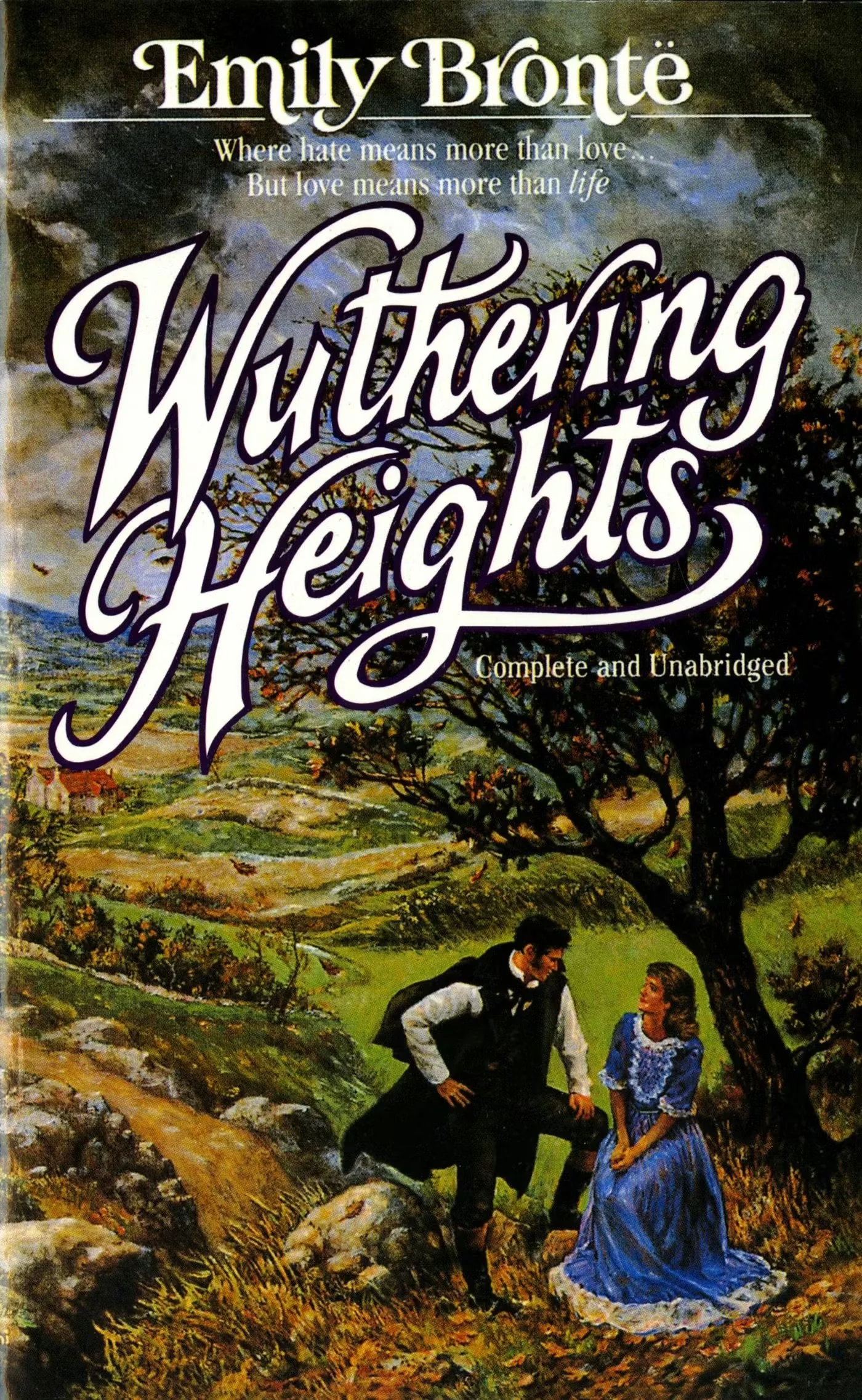
1. Wuthering Heights Emily Brontë
4/5 Reading Sounds: Nowadays/Hot Honey Rag by, Renée Zellweger, Catherine Zeta-Jones & Taye Diggs
For a while now I have been on a journey to read more digital books. I wrote a bit about this last year in my review of Wishing on a Star by, Deborah Gregory. I even specifically talked about trying to read Wuthering Heights on my phone, but it never amounted to much in the way of real progress. Over a year after I downloaded it, the book, I was still only 13% through the book. I was not connecting with the language, specifically, and the story fell flat for me in every way. Not even the impending release of the 2026 movie and associated Charli xcx album was enough to tempt me through the end of the book. When the trailer for the movie was released, I was shocked; it was being marketed like the next smutty fantasy adaptation (minus the fantasy haha). Had I completely misunderstood the tone of the book? My sister told me, yes, I had. Still, I could not get even another percent through the book before the movie eventually came out early this year. I went to see it with my sister, and once again, I was blown away. Weirdly sexual overtones aside, the movie was funny. I don’t think I enjoyed it all that much, but after the credits rolled, I had a few more questions for my sister: How different was the book from the movie? (Very.) Was Catherine that funny in the book? (Yes.) My curiosity was piqued enough to pick it up again, and I finished the rest of the book in two weeks. I am not sure how I missed the humor of the book when I first tried to read it; I feel a bit dumb, like the movie had to give me permission to look for the jokes before I could pick up on them at all. Regardless, I did think the book was very funny. Catherine is the predominant source of humor in the first half of the book, before she dies and her daughter takes over the role of “main character” for the rest. This introduced another source of confusion, though, because the movie shifted the story in such a way that Catherine does appear to be the protagonist, however meager her character arc seems. That made more sense to me in the book, because she died halfway through, and I realized that she definitely is not the protagonist. I was then left to wonder who, if not Catherine or her daughter, because a protagonist cannot only star in half of their novel, right? I narrowed it down to Nelly the narrator or Heathcliff the anti-hero, before finally landing on Heathcliff. Throughout the book he deals with the systemic racist that causes Catherine to say a union to him would “degrade” her. His rags-to-riches storyline and the ultimate way in which he gives up on his life’s devotion to revenge at the very last minute was the most protagonist-y character arc in the whole book. Even with the seeming mobility and influence of Catherine’s character (and that of her daughter), there is no fully realized character arc to point to. I had also heard from various sources that Catherine is “crazy”. But I related to Catherine too much to accept this flippant summary of her character. In a world that is run on social politics and conservative pre-Victorian niceties, Catherine reacted to the bullshit in much the same way I believe that I would respond. She called it out, and largely refused to participate unless she could strong-arm everyone into doing it her way–which she was able to do a surprisingly and inordinately large amount of the time. In this way, the book really did remind me of another fantasy story, Peter Pan. In the same way that Neverland bent to every whim of that prepubescent anti-hero, summoning storms to accommodate his tantrums and summers for his joys, the inhabitants of Wuthering Heights and its surrounding country are very much at the beck and call, it seems, of Catherine Earnshaw. No matter how preposterous her behavior or how inappropriate her etiquette, everyone cannot help but absolutely obsess over her. And she’s so toxic about it, it almost makes me jealous. I definitely enjoyed her half of the book better than that of her daughter.